
Deep Breathing & Lymphatic Health | MassageNetics
Deep Breathing and Your Lymphatic System: Why Your Breath Matters
The Lymphatic Living Series | MassageNetics
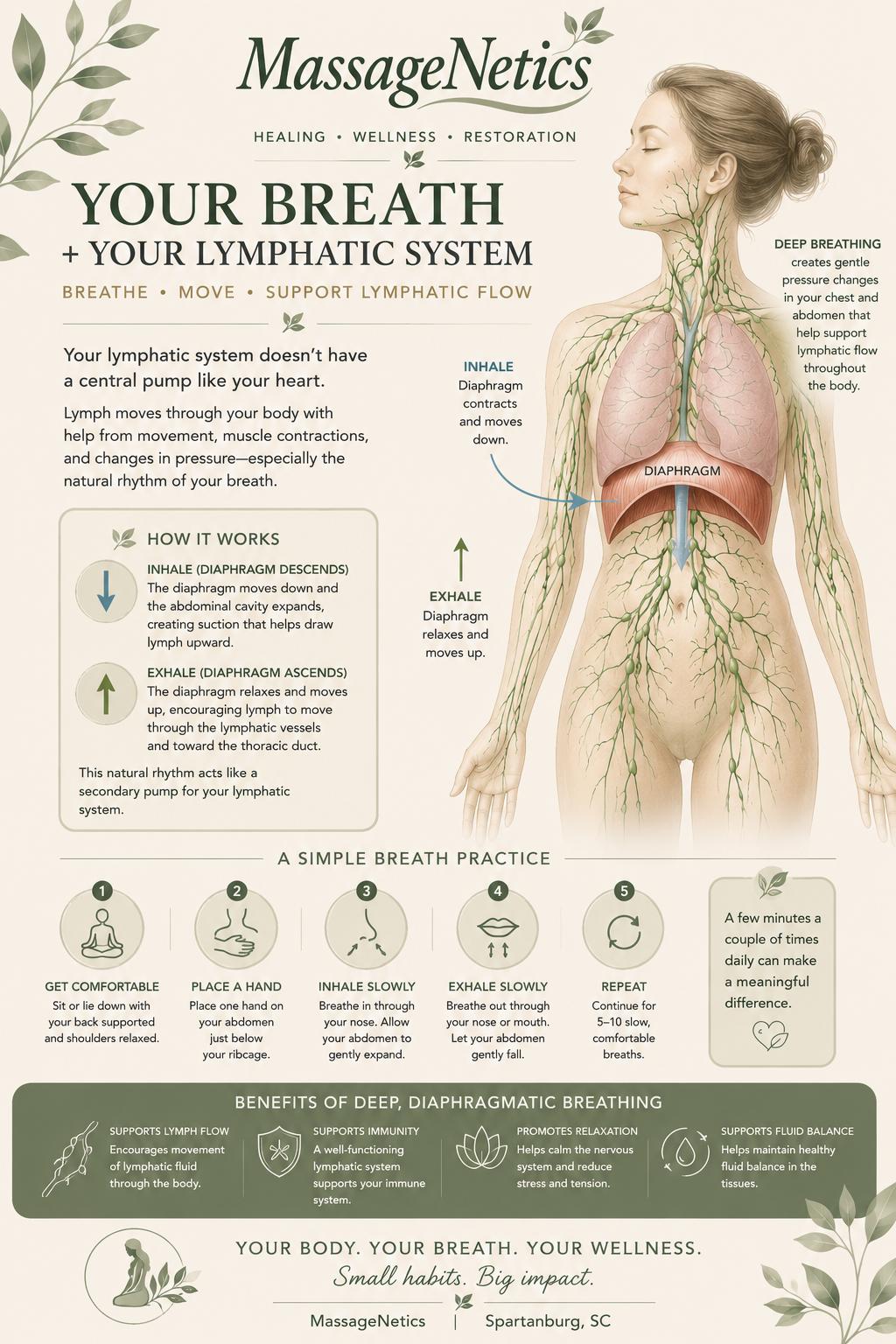
Most of us breathe thousands of times every day without giving it much thought. But your breath does more than supply your body with oxygen. The simple act of breathing also creates pressure changes within your chest and abdomen that can help support normal lymphatic movement.
Understanding this connection is especially important because, unlike your cardiovascular system, your lymphatic system does not have one central pump like the heart.
Instead, lymphatic fluid moves with assistance from several mechanisms within the body—including muscle contractions, physical movement, contractions of lymphatic vessels, and the natural pressure changes created by breathing.
What Happens When You Take a Deep Breath?
Your diaphragm is a large, dome-shaped muscle located beneath your lungs.
When you inhale, the diaphragm contracts and moves downward. As it does, pressure changes occur within the chest and abdominal cavities.
When you exhale, the diaphragm relaxes and moves upward again.
This continual change in pressure helps support the movement of lymph through lymphatic vessels, particularly as lymph travels from the lower portions of the body toward the chest, where it eventually returns to the bloodstream.
Think of diaphragmatic breathing as one of the body's natural mechanisms for supporting lymphatic transport.
Why Is Lymphatic Movement Important?
Your lymphatic system performs several important functions.
It helps collect excess fluid from the tissues and return it to circulation. It also transports immune cells and plays an important role in immune surveillance and maintaining normal fluid balance.
Because the lymphatic system works closely with both the circulatory and immune systems, supporting normal lymphatic movement is an important part of overall wellness.
Chest Breathing vs. Diaphragmatic Breathing
Not every breath involves the diaphragm to the same degree.
When we're stressed, uncomfortable, or rushing through the day, breathing may become shallow and concentrated primarily in the upper chest.
Diaphragmatic breathing is slower and allows the abdomen to gently expand as the diaphragm moves downward.
You don't need to force an extremely deep breath. The goal is simply slow, comfortable, relaxed breathing.
Try This Simple Diaphragmatic Breathing Exercise
Find a comfortable seated or lying position and allow your shoulders to relax.
Place one hand gently over your abdomen, just below your rib cage.
Slowly inhale through your nose.
As you inhale, allow your abdomen to gently expand beneath your hand.
Then slowly exhale through your nose or mouth and allow your abdomen to relax.
Repeat for approximately 5–10 comfortable breaths.
This simple exercise can be practiced periodically throughout your day. Stop if you become dizzy, uncomfortable, or short of breath.
Breathing Is Only One Part of Lymphatic Health
Deep breathing isn't a treatment for lymphatic dysfunction, and it doesn't replace appropriate medical care or specialized therapy when those services are needed.
Instead, breathing is one of several normal physiological mechanisms that help support lymphatic transport.
Other everyday habits that can support normal lymphatic movement include:
- Regular movement and walking
- Appropriate physical activity
- Avoiding prolonged periods of inactivity
- Maintaining appropriate hydration
- Following individualized recommendations from your healthcare providers
For individuals with diagnosed lymphedema, significant unexplained swelling, or medical conditions affecting fluid balance, individualized medical guidance is particularly important.
Where Does Manual Lymphatic Drainage Fit In?
Manual Lymphatic Drainage (MLD) is a specialized hands-on technique using gentle, rhythmic movements designed to support lymphatic fluid movement.
MLD is quite different from traditional deep-tissue massage. Because many lymphatic structures are relatively superficial, the techniques used during MLD are generally gentle and specifically directed.
Depending on the individual's needs and medical circumstances, Manual Lymphatic Drainage may be incorporated into care for swelling, lymphatic conditions, or recovery following certain surgical procedures.
At MassageNetics, treatment is individualized because every client's body, health history, and recovery journey are different.
Small Habits. Meaningful Support.
Supporting your lymphatic system doesn't always require something complicated.
Sometimes it begins with something you're already doing right now:
Breathing.
Take a few moments today to slow down, relax your shoulders, and notice your breath.
Your body is constantly working on your behalf. Learning how it works can help you become a more informed participant in your own wellness.
The Lymphatic Living Series
Lymphatic Living is an educational series from MassageNetics created to help you better understand your lymphatic system and the everyday habits that can support overall wellness.
Follow along as we explore lymphatic health, Manual Lymphatic Drainage, movement, swelling, post-surgical recovery, fibrosis, scar tissue, hydration, and more.
MassageNetics
Healing • Wellness • Restoration
Spartanburg, South Carolina